
The Definitive Guide to H-Beams: Engineering, Applications, and Structural Advantages

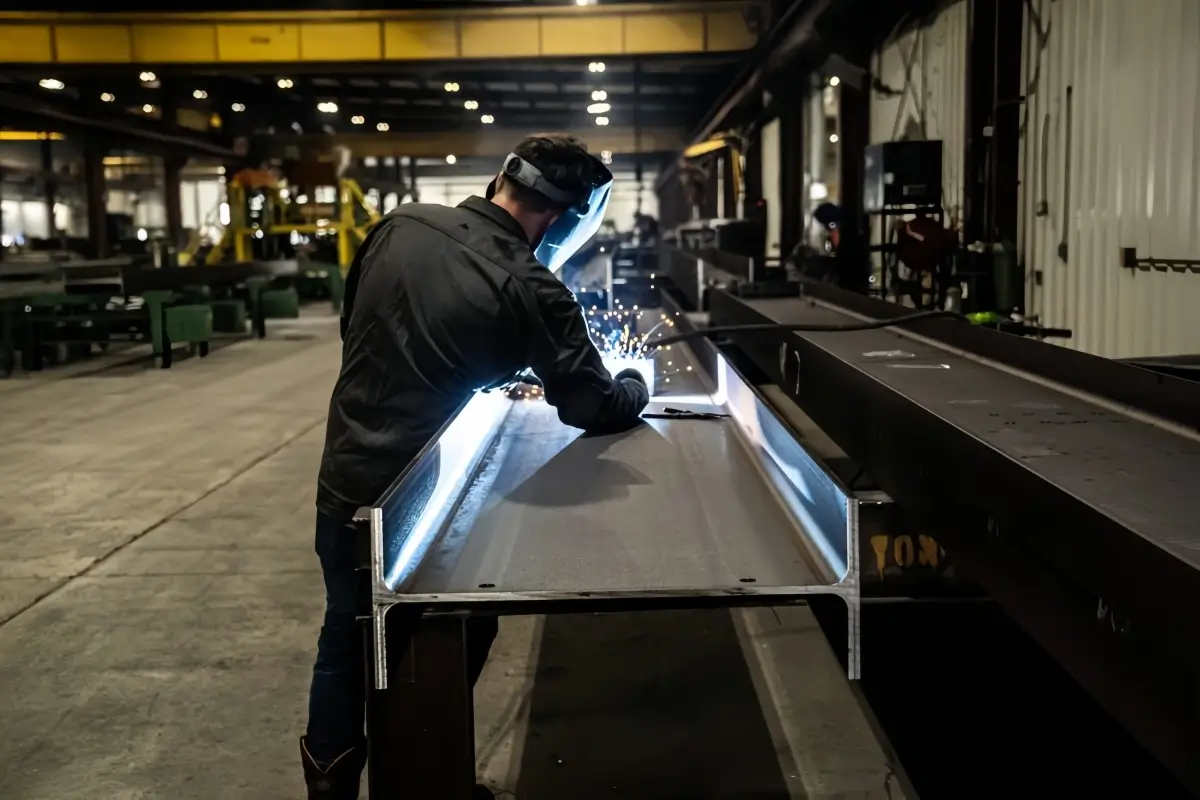
In the realm of modern construction and heavy engineering, the H-beam stands as an architectural marvel. Often referred to as the “Universal Beam” or “Wide Flange Beam,” this structural steel member has revolutionized the way we build everything from soaring skyscrapers to massive industrial complexes.
But what exactly makes the H-beam the preferred choice over other sections like the I-beam? In this comprehensive guide, we will explore the technical nuances, manufacturing standards, and the critical role H-beams play in the global infrastructure landscape.
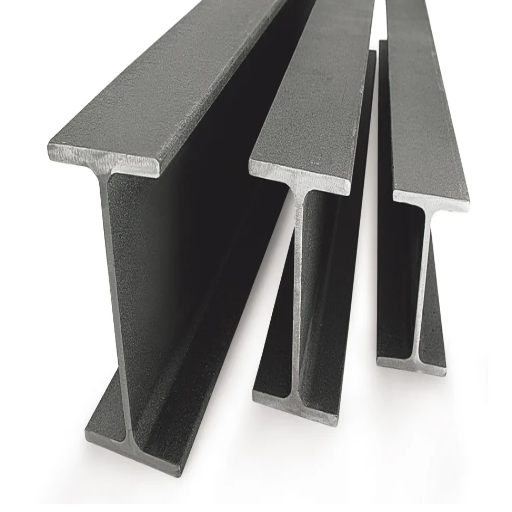
1. What is an H-Beam? Understanding the Geometry
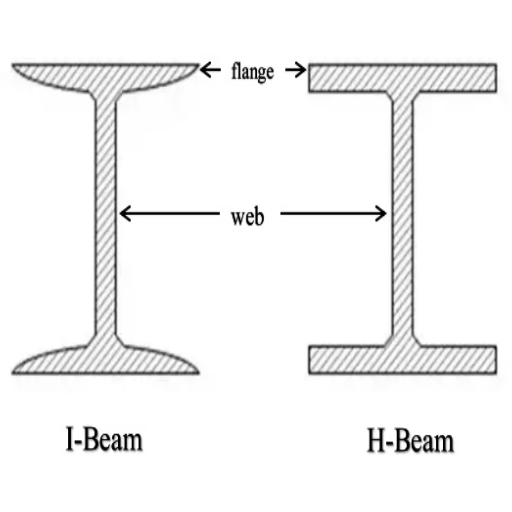
The H-beam is a structural steel beam shaped like the capital letter “H.” It consists of two wide horizontal plates, known as flanges, connected by a vertical component called the web.
Key Geometric Features:
- Wide Flanges: Unlike I-beams, the flanges of an H-beam are significantly wider. This provides a larger surface area and greater lateral stiffness.
- Parallel Inner Surfaces: The inner and outer surfaces of H-beam flanges are parallel, making them easier to bolt or weld compared to the tapered flanges of traditional I-sections.
- Thicker Web: The central web of an H-beam is often thicker, allowing it to withstand immense vertical loads without buckling.
2. H-Beams vs. I-Beams: The Critical Differences
While the terms are often used interchangeably by laypeople, engineers recognize distinct differences that dictate where and how these beams are used.
| Feature | H-Beam (Wide Flange) | I-Beam (Standard) |
| Flange Width | Wider and thicker | Narrower and often tapered |
| Span Capability | Suitable for long spans (up to 100m) | Typically used for shorter spans |
| Weight | Heavier and stronger | Lighter and less rigid |
| Load Resistance | High resistance to twisting (torsion) | Primarily resists bending in one plane |
| Customization | Can be built up (welded) or rolled | Usually a single piece of rolled steel |
3. Technical Specifications and Material Grades
To ensure structural safety, H-beams must adhere to rigorous international standards. Knowledge of these grades is essential for procurement and engineering design.
Common Standards:
- ASTM A36: The most common carbon structural steel, offering excellent weldability and a yield strength of 36,000 psi.
- ASTM A572 / A992: High-strength, low-alloy steels (HSLA). A992 is currently the most popular grade for H-beams in the US due to its superior strength-to-weight ratio.
- EN 10025 (S235, S275, S355): The European standard for hot-rolled structural steel products.
Manufacturing Processes:
- Hot Rolling: The most common method, where steel is passed through rollers at temperatures exceeding 1,100°C. This creates a unified, seamless piece of steel.
- Welded (Built-up) Beams: In cases where massive or non-standard dimensions are required, plates are precisely cut and welded together to form an H-shape. This is common in heavy industrial foundations.
4. Why H-Beams Dominate Modern Construction
The widespread adoption of H-beams is not accidental; it is a result of their mechanical efficiency.
Superior Load-Bearing Capacity
The “H” configuration is optimized for carrying heavy loads. The wide flanges distribute the weight across a larger area, preventing the beam from bending or “deflecting” under pressure. This makes them ideal for the primary columns and support beams of multi-story buildings.
Torsional Resistance
Standard I-beams are susceptible to twisting when subjected to lateral (sideways) forces. The wide-flange design of the H-beam provides exceptional resistance to this torsional stress, which is vital in earthquake-prone regions or for structures facing high wind loads.
Ease of Fabrication and Assembly
Because the flanges are parallel, H-beams are remarkably “welder-friendly.” They provide flat surfaces for connecting secondary beams, brackets, and bracing. This simplifies the assembly process on-site, reducing labor costs and construction timelines.
5. Primary Applications of H-Beams
From the depths of the ocean to the peaks of the skyline, H-beams are found in diverse environments:
- Skyscrapers and Commercial Buildings: Serving as the “spine” of the structure, providing the necessary support for high-rise steel frames.
- Industrial Warehouses: Used to create large, open floor plans with minimal support columns, thanks to their long-span capabilities.
- Bridges and Overpasses: Their high load-bearing capacity is essential for supporting the constant dynamic weight of vehicular traffic.
- Shipbuilding and Offshore Platforms: H-beams are used in the hulls of large vessels and the supports for oil rigs, where they must withstand both weight and corrosive environments.
- Heavy Equipment Frameworks: Used in the manufacturing of trailers, cranes, and large-scale agricultural machinery.
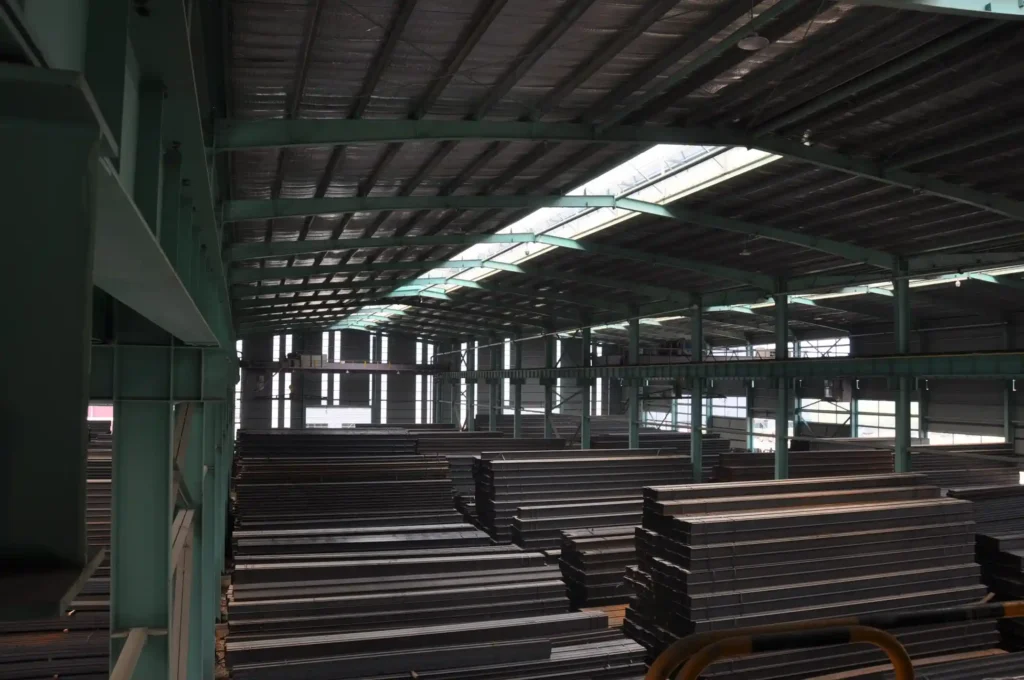
6. Sourcing H-Beams: Precision and Quality Control
When procuring steel H-beams, “Trust but Verify” is the industry mantra. High-quality H-beams must undergo several tests to ensure they meet the project’s safety requirements:
- Chemical Analysis: Ensuring the carbon, manganese, and silicon levels are within specified limits to guarantee weldability and strength.
- Tensile Testing: Verifying the yield point and ultimate tensile strength of the steel.
- Dimensional Tolerance Checks: Using precision tools to ensure the web height and flange width are accurate within millimeters.
- Ultrasonic Testing (Optional): To detect internal flaws or air pockets in the steel that could lead to catastrophic failure under load.
7. Sustainability and the Future of Steel
The modern steel industry is increasingly focused on Green Steel. H-beams are highly sustainable because steel is $100\%$ recyclable. Old beams from demolished buildings are melted down to create new structural members without any loss in quality. Furthermore, the high strength-to-weight ratio of H-beams means that less material is required to support a given load, reducing the overall carbon footprint of a project.
Conclusion
The H-beam is more than just a piece of metal; it is the fundamental building block of our modern world. Its unique geometry provides a perfect balance of strength, efficiency, and versatility. Whether you are an engineer designing a bridge or a developer planning an industrial park, understanding the properties and applications of H-beams is crucial to the success and safety of your structure.
By prioritizing high-grade materials and adhering to international manufacturing standards, the industry ensures that our cities remain standing strong for generations to come.